
This post is also available in:
 ไทย
ไทย
Sirirung Srisittipisarnpop, HRDF
Photos courtesy of Fair Finance

On 17 September 2025, 16.00, at the United Nations Thailand, the Human Rights and Development Foundation (HRDF) and various civil society organizations have participated in the UN Responsible Business and Human Rights Forum 2025 (UNRBHR) on “Beyond Crisis: Innovating Community-Led Approaches for Remedy and Corporate Accountability”. The event clearly attests to how “community-driven change” is not merely an ideal, but rather a real force that can help to make change in business sector and to concretely expand access to justice among those affected people.
Highlights from panel discussions
- The migrant workers’ litigation against Tesco – an example of a case filed by community to cause disruption and to demonstrate power through cooperation among affected people and human rights organization (HRDF)
- Samta Nyay Kendra, India – a legal clinic to advocate for acceptance of transgenders’ rights and to promote equal employmentเพศ (APSWDP India)
- Community-Based Human Rights Assessment (COBHRA) – community-based assessment of human rights impacts to ensure voice of rights holders is central to decision-making (Oxfam in Asia)
- OECD NCP from South Korea – an experience that lay bare weaknesses and strengths of international grievance mechanisms to ensure human rights due diligence (KHIS)
The discussion was focused on the inclusivity of rights holders in the remediation process, gaps between business pledges and actual implementation, and challenge facing the effort to ensure effective and sustainable grievance mechanisms. Organized by Oxfam in Asia, APSWDP India and Sal Forest in collaboration with the Human Rights and Development Foundation (HRDF), Raks Thai Foundation and MAP Foundation, the forum epitomized transborder cooperation based on the conviction that justice should be accessible as it is a fundamental right of everyone.
“Litigations are not the end of a problem. Rather, it is a beginning of change driven by the persons who work on the issue.”

Raweeporn Dokmai, Human Rights and Development Foundation (HRDF) began the discussion on “Migrant workers in textile industry: Litigations that inspire structural change. Raweeporn shed light on major lessons learned from the case brought by 136 migrant workers from Myanmar against VK Garment (VKG), Tesco’s supplier in in Mae Sot District, Tak Province. The case symbolized the fight for dignity and human rights of migrant workers.
Key issues presented:
- Facts about the case, as workers were forced to work 99 hours per week while receiving only 120 baht per day and having to work in unsafe environment.
- Litigation: The workers sued for damages worth more than 34 million baht, although the Thai court only awarded them 6.8 million baht based on calculation formula derived from the company’s internal rule. This showed systemic restraints of Thailand’s remediation procedure.
- In terms of the role of civil society, HRDF in collaboration with a legal team from the United Kingdom has been supporting the workers throughout the litigation process through raising their awareness about legal process and empowering them to ensure they protect their rights.
- In terms of common challenges, the migrant workers are often subjected to rights violation including low pay, being forced to work overtime and being forced to sign false documents to trick the labour inspectors.
- In terms of outcome and meaning, although the litigation lasted more than five years, it has brought about a shattering impact causing the workers to be aware of their rights and paving the way for international networks to get involved and to advocate and publicize information about the case.
- In terms of long-term goals, the case has been capitalized to advocate for international human rights standards to be adopted in the global supply chain to ensure multinational corporations held accountable to all workers regardless of where they work.
“When community leads the assessment effort, we shall not only receive the genuine information, but also more sustainable change.”
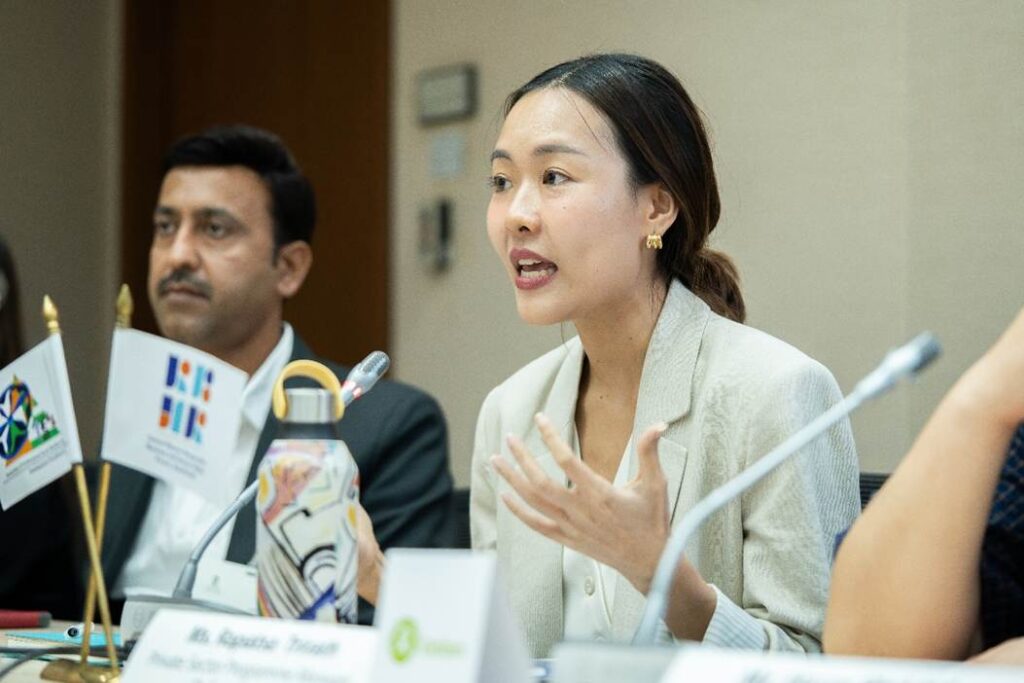
Rapatsa Trirath, Private Sector Programme Manager, Oxfam in Asia presented on the restoration of community’s power “Community-Led Human Rights Impact Assessment – CLHRIA / COBRA. Rapatsa explained about COBRA or Community-Led Human Rights Impact Assessment, a tool developed by Oxfam in Asia to ensure community themselves take the lead to conduct impact assessment of business operations that affect human rights. Rather than being “assessed”, they take the assessment into their own hand.
Essentially, COBRA is a tool for assessment in parallel to the companies’ operation. It genuinely reflects viewpoints of rights-holders and encourage the community’s involvement as “rights holders”, rather than “beneficiaries.” Through empowerment, the community can have access to tools and knowledge to defend their rights as the tool helps to identify the most affected groups and the nature of such impacts. It is focused on opening space for community and workers to ensure they can interact with companies on a level playing field to explore collectively a fair solution.
Meaningful participation process
- It has to begin from the start, prior to the commencement of a company’s project or activity.
- It is not “data extorted” from the community. Rather, it must be based on a mutual exchange of knowledge.
- Community is offered time to understand and discus with each other, rather than to conduct individual interview, which may make the workers too afraid to share their opinions.
- Use the language understood by the community— For example in Latin America, English language used by the companies does not help the community to understand and to participate.
- The role of NGOs or INGOs, as they should rather play a role of facilitator than leader or representative of the community.
COBRA’s ultimate goal is to “restore power of the most affected persons” to ensure they have the right to chart the course to acquire remedies and to bring about change by themselves since justice can genuinely restore through making voice of the affected people heard
“Equality is not merely about rights. Rather, it is a foundation on which everyone can stand and actualize their capacity.”
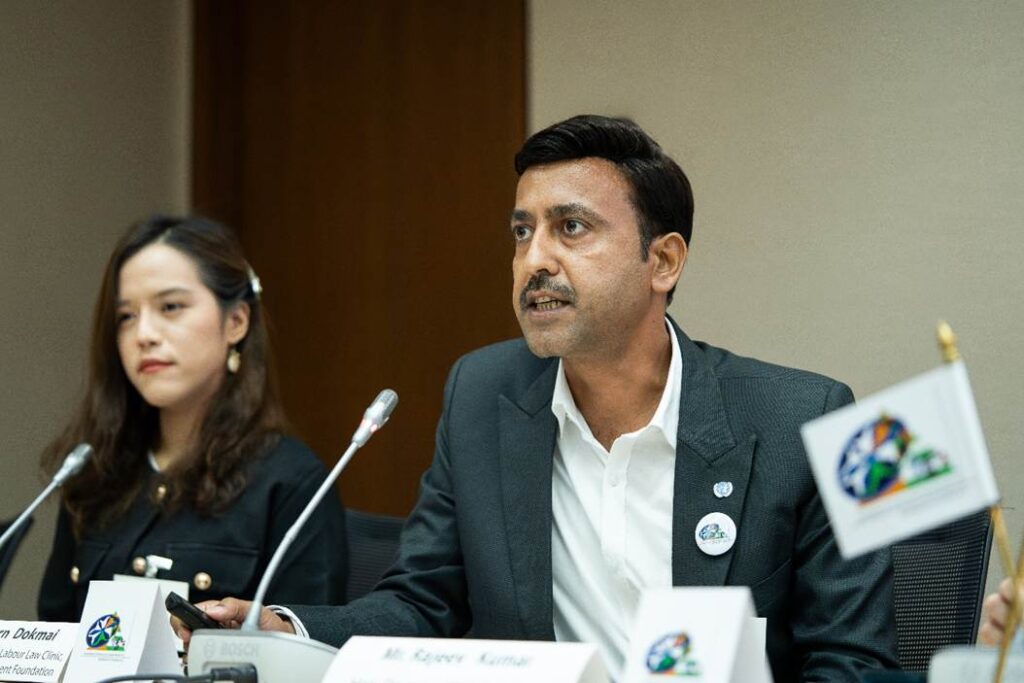
Rajiv Kumar (APSWDP India) from Samta Nyay Kendra Legal Clinic spoke on the topic “Innovations for equality: Legal clinic for transgenders in India” which has made strides in terms of the advocacy for transgenders’ rights through legal assistance, employment for diverse people, and replicable empowerment. Founded on community-driven change, the effort helps India’s transgenders to have access to equal rights and opportunities in all aspects of their lives.
From his presentation, Kumar gave an account about the problems faced by India’s transgenders including various forms of discrimination and harassment regarding access to justice, education, public health and labour market and how they have been marginalized. The group has adopted an innovative approach by “establishing a free legal clinic” in collaboration with the state and private sector to bring about systemic change. The clinic’s four main objectives including (1) to ensure transgenders’ access to important documents including ID cards and ballots, (2) to raise awareness and acceptance in society, (3) to promote sustainable economy and livelihood through income generation and financial independence, and (4) to ensure sustainability through collaboration with various sectors. Within three years, the clinic has offered counseling to 180 clients and assisted in 200 cases regarding access to necessary public documents, advocating for employment and has received national awards as a result of which the clinic has been replicated into five other legal clinics in Southern India.
We offer something deeper than law. According to Samta Nyay Kendra, the legal clinic does not just provide legal services. It is also a space of dignity that link up human rights, business and social equality to ensure the opportunities and equality of employment for everyone”
“Albeit imperfect, NCP is a first step to foster responsibility in the business world. It can be further developed as a procedure to make the voice of the affected persons heard.”
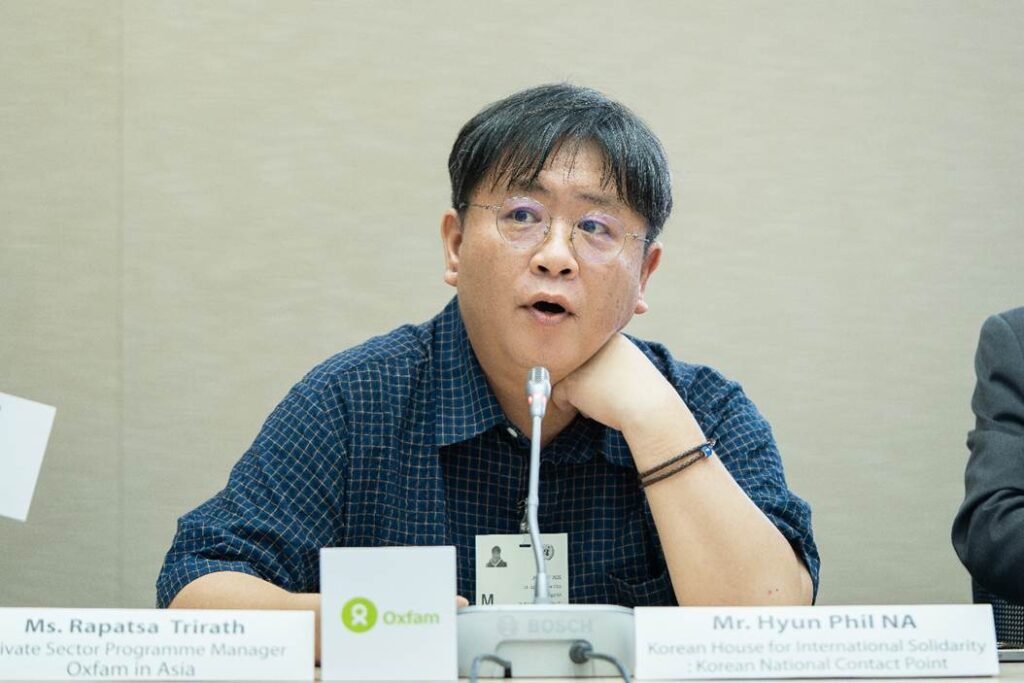
Hyunpil Na (KHIS, South Korea), social development activist addressed the topic “OECD National Contact Point: NCP” and offered lessons learned from the use of OECD’s NCP in South Korea in terms of its weaknesses and strengths and how it has brought attention to rights violations through lessons learned in South Korea.
Hyunpil Na shared his experience working through the South Korean OECD National Contact Point (NCP), an agency established in OECD member countries to receive complaints and to investigate human rights violations perpetuated by multinational companies. South Korea has become an OECD’s member since 1996. His presentation shed light on the role of NCP as a mediator in negotiations and mediation between the complainants and the accused companies. Not a formal judicial procedure, NCP is a channel through which an effort can be advocated for responsibilities of business sector toward human rights.
In terms of challenge to the South Korea’s NCP, until know, South Korea’s NCP has yet to yield satisfactory results to the complainants. Key case studies include the case of Post-Core India, South Korean companies’ investments in Myanmar which involve the coup makers and human rights violations.
In terms of the NCP ‘s weaknesses, this includes a lack of resources and mandatory power and a lack of monitoring or evaluation of the NCP’s implementation in each country. It merely serves as a “space for negotiation” rather than a judicial procedure to effectively impose sanctions or remedies. Regarding recommendations and future solutions, Hyunpil Na proposed that other countries in this region including Thailand and Indonesia consider joining OECD as a member in order to acquire their own NCP. This can help to enhance the standards for the protection of human rights in business sector. In South Korea, an effort is being made to advocate for Human Rights Due Diligence (HRDD) Law to ensure companies engage in an investigation of human rights assessment in their own supply chain. Nonetheless, the existing law is simply focused on large-scale companies and “prevention of future violations” rather than “remediating the current affected persons.”