This post is also available in:
 ไทย
ไทย
“Human rights are not a distant issue. Rather, they attest to the equal dignity of all human beings.”
— Assoc. Prof. Gothom Arya
Throughout the 25 years of the Human Rights and Development Foundation (Human Rights and Development Foundation (HRDF), it has strived to take the lead in the defense of the rights of migrant workers and vulnerable people in Thai society with the belief that “justice knows no boundaries.”
- The origin of the belief in human dignity
HRDF’s roots are entrenched in the fight for human rights in Thailand. One of the founding members, Assoc. Prof. M.R. Prudhisan Jumbala recounted the atmosphere after the 14 October 1973 uprising that young people then started to question the power that be and strongly believed in the people’s power. He himself started from working with the “Union for Civil Liberty (UCL)” before joining forth with Mr. Somchai Homlaor and various human rights activists to found HRDF.
“As the Thai economy grows, migrant workers who contribute significantly to our development have been left without protection. HRDF has thus been created to give them their voice and ensure they are not left behind.”
— Assoc. Prof. M.R. Prudhisan Jumbala
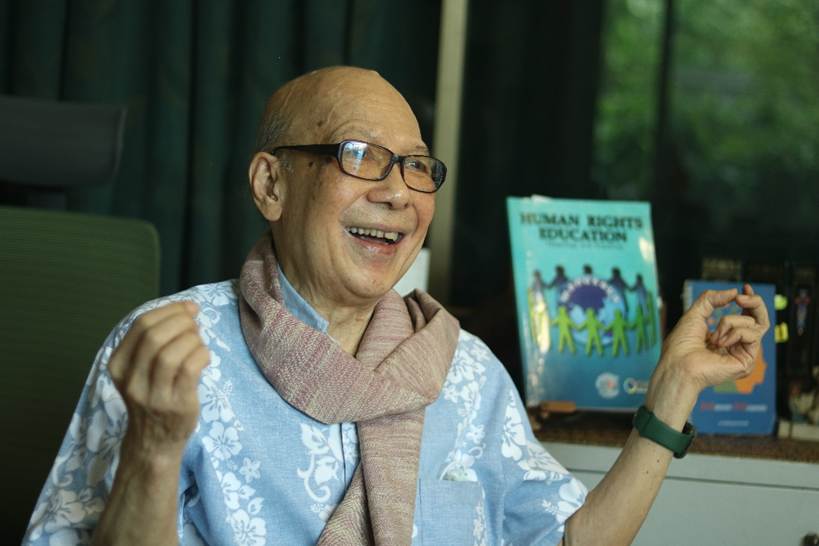
Photo: Assoc. Prof. M.R. Prudhisan Jumbala, Board Member, Human Rights and Development Foundation (HRDF)
According to Assoc. Prof. M.R. Prudhisan, HRDF has been designed to bridge the gap between “human rights” and “development”. Practically, it does not work just to protect workers, but to propose legal reform, to establish counseling centers at the border area and to advocate for policy implementation. In addition, the Asian Institute for Human Rights (AIHR), an academic wing of HRDF, has been established to offer training and research work to raise the awareness in Thai society that human rights are not Western concepts. Rather, they are rooted in every religion and culture in Asia. An AIHR’s publication, “Our Rights, Human Rights”, serves as a pivot of the effort to raise the awareness about human rights making them easy to understand and more familiar to us.
“HRDF doesn’t just work for migrant workers, but Thai society as a whole to ensure justice and understanding of humanity among all.”
— Assoc. Prof. M.R. Prudhisan Jumbala
- From roots to actions: Stance of our founders
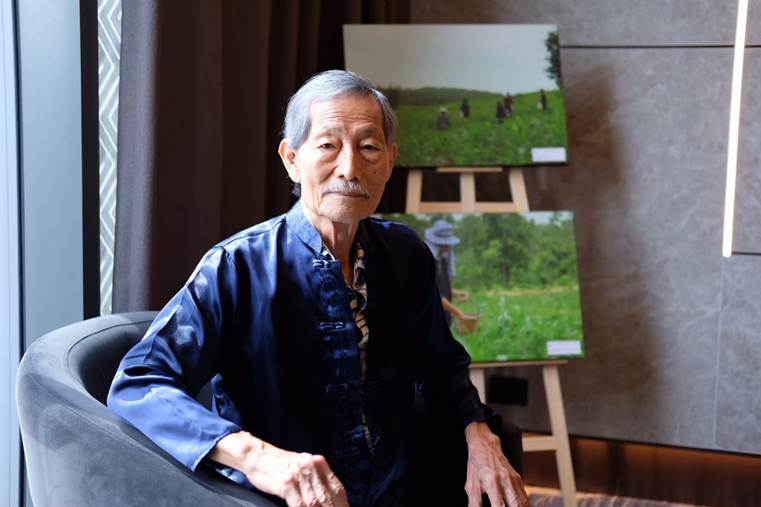
Photo: Assoc. Prof. Gothom Arya, Board Member, Human Rights and Development Foundation (HRDF)
Assoc. Prof. Gothom Arya Board Member recounted that several founding members used to work with the Union for Civil Liberty (UCL) which was founded in 1973. Then, they embarked on founding an organization which might be able to sustain its work in a long run and worked on more issues and operated as a non-profit foundation. They eventually chose “a meaningful and dedicated way” focusing on the promotion of the rights or workers and migrant workers realizing that these workers lack the opportunity and legal status and are not treated equally to their Thai counterparts.
“We want to ensure migrant workers afford the rights and opportunity they deserve, not because they are foreigners, but because they are human beings.”
— Somchai Homlaor
HRDF’s Chairperson, Somchai Homlaor recounted the origin of HRDF which was founded as a local office in Thailand for a regional human rights organizations in Southeast Asia and Asia. HRDF focusses on assisting asylum seekers and migrant workers, particularly Burmese activists who fled from persecution in 1988, before expanding its work for workers from other neighboring countries.
- Standing tall against all odds
Throughout the past 25 years, Mr. Somchai sheds light on how HRDF has been working in the field, from Mahachai, Mae Sot to Northern Thailand via its offices in five provinces including the headquarters in Bangkok, and the offices in Chiang Mai, Mae Sot, Samut Sakhon and Phuket and how they have been working to support the workers all along. “Test case litigations” have been used as a tool to advocate for the acceptance of rights and benefits of employees at the policy level. They have opted to fight through the legal process and political and social advocacies in order to enhance the standards of practice in compliance with the rule of law without creating conflicts, but forging understanding and humanity.
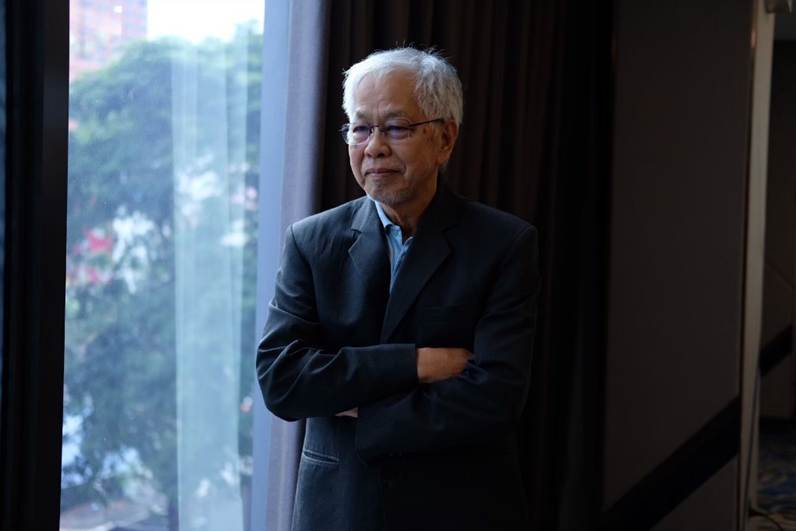
Photo: Mr. Somchai Homlaor Chairperson, Human Rights and Development Foundation (HRDF)
- From test case litigation to policy advocacy
HRDF uses test case litigations as a tool to enhance standards of practice among the authorities and the employers. Such work has since been replicated to support policy advocacies including the advocacy for migrant workers to be granted the right of residence, to have access to legal rights according to labour and human rights laws and labour rights afforded by the ILO Conventions including the right to unionization. Although certain issues have yet to succeed, but in every step of our implementation, it helps to raise the awareness in Thai society.
Mr. Somchai reiterated that HRDF’s working approach is rested on the notion of “feet down to earth, hands reaching out to international mechanisms” meaning that while working at the grassroots level, we attempt to make use of domestic and international mechanisms including the United Nations, and the ILO to ensure access to rights among workers and their families.
- Growth and change at present
From another angle, HRDF is honored to have Ms. Pairatana Junthong as our senior staff member who has been working with us for nearly the past 25 years. Albeit not a founder, Ms. Pairatana is among the main driving forces behind the organization’s sustenance, from the early days of coordinating with migrant workers in Mae Sot, until the day HRDF has established offices throughout the country.
“Back then, no one knew about HRDF” recounted Pairatana, with a smiley face.
“Anyhow, I knew full well these workers drastically needed help. I was a worker myself and I understood their plight.”
—Pairatana Junthong
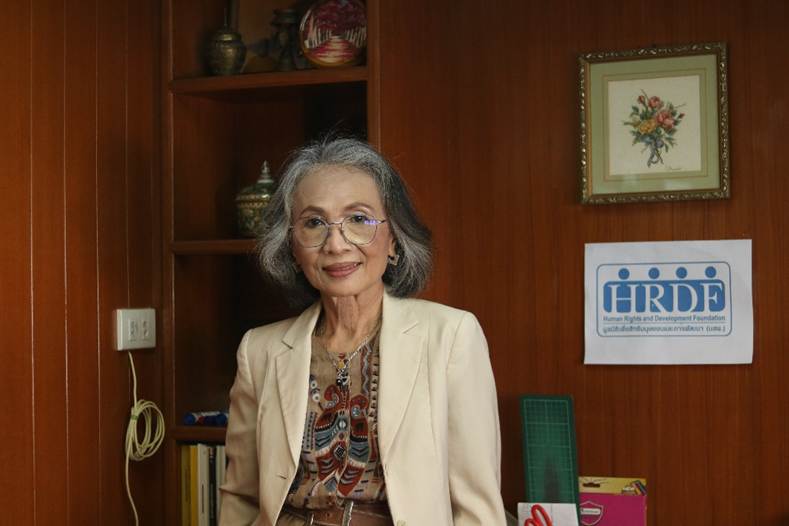
Photo: Ms. Pairatana Junthong, Senior Staff Member, Human Rights and Development Foundation (HRDF)
Ms. Pairatana recounted that she has seen a series of young people who have helped to rejuvenate the organization and is proud to see how HRDF has grown up with power from generation to generation. For her, HRDF is not merely a workplace. It is a part of her life which helps to teach her that justice is an assistance offered quietly, but is driven by conviction.
“Every time I saw a worker treated unjustly, however trivial the matter was, I always felt it is worth it to be here.”
— Pairatana Junthong
- Pride and transparency
Ms. Anothai Soma, Board Member and Treasurer of HRDF, recounted the 25-year-journey of HRDF and how it attests to the evolution of the genuine work for human rights. In the beginning, HRDF dedicated itself to serving Burmese workers in the border area offering the workers paralegal training and training on their basic rights. Later, HRDF has expanded its work to the policy level covering migrant workers of all nationalities including Lao, Cambodia and Vietnam.
The arrivals of young staff members help to modernize HRDF’s working approaches with the adoption of social media and creative communication to ensure our access to workers and wider public, to create new inspirations and powerful collaboration.
“The team of young staff members helps to rejuvenate and rekindle the hope of our organization. They do not simply carry on our work; they also help the organization to move forward.”
— Anothai Soma
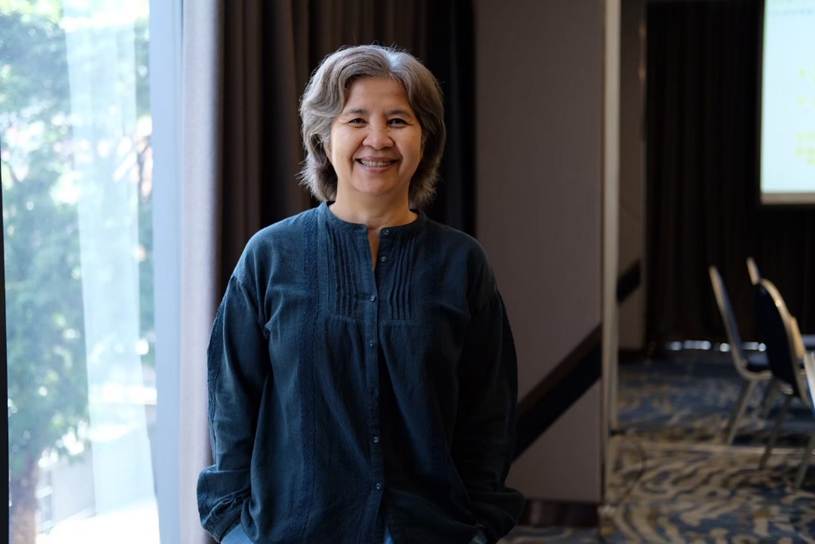
Photo: Ms. Anothai Soma, Board Member and Treasurer, Human Rights and Development Foundation (HRDF)
Ms. Anothai recounted proudly that “Time flies”. Upon learning that HRDF is hitting its 25th anniversary, she truly appreciates the power of the team and want to assure our supporters that the assistance they have given to HRDF shall not go waste. HRDF has been working with determination and transparency and is subject to complete accountability. Every single penny has been well spent to genuinely benefit the workers and their families in Thailand. This in turn has brought about the enhancement of living quality of Thai society as a whole.
- Growth under young leaderships
Mr. Boonthan Tansuthepverawongse, Board Member and Executive Secretary of HRDF, said that he has joined HRDF since 2017 and become its Executive Secretary in 2019. With more than 40 years of experience in human rights work in Thailand and Asia-Pacific, he views his role not simply as an administrator, but a person who helps to proliferate the contributions made by the previous generation to ensure they can be sustained and replicated further on. In the past several years, he has seen how HRDF has grown from a small civil society organization to become a leading human rights organization at the ASEAN level. Nowadays, HRDF does not just offer help to the workers. It has served as advisor to the ASEAN Intergovernmental Commission on Human Rights (AICHR), another proof as to how the organization has garnered acceptance from society.
“Our pride does not rest on how much our organization has grown. It is based on understanding from society and how we help to alleviate biases in society.”
— Boonthan Tansuthepverawongse
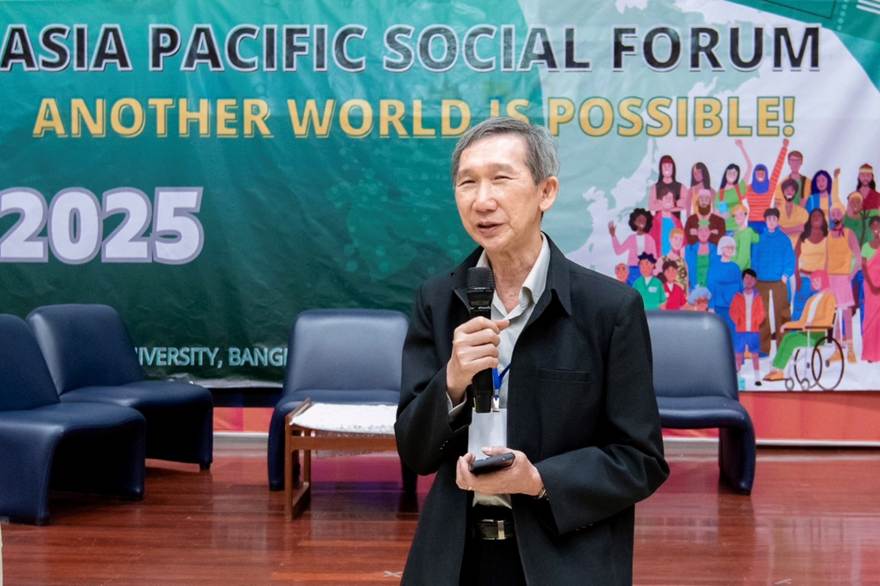
Photo: Mr. Boonthan Tansuthepverawongse, Board Member and Executive Secretary of Human Rights and Development Foundation (HRDF)
For Mr. Boonthan, HRDF’s growth cannot be measured from its scale and reputation, but from the number of hearts that still believe in the value of justice and humanity. He believes that the organization’s future shall be stable as long as there are young generation who help to carry on the same ideology which upholds that everyone must be treated equally no matter who they are.
- The never-changing essence and the power of young generation
Ms. Preeda Thongchumnum, Board Member, reflects that despite 25 years past, the organization remains essentially “a change agent” which is determined to work with vulnerable groups, to create their space and ensure their voice is heard paving the way to equality. She is glad that the young generation still have power and uphold the organization’s ideology. They have become more mobilized, more enthusiastic to use technologies and to get adapted to change in society.
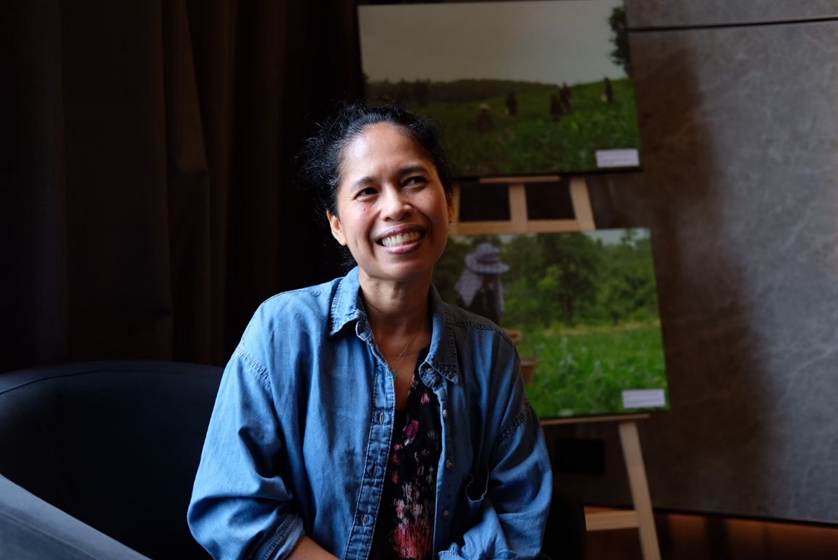
Photo: Ms. Preeda Thongchumnum Board Member of Human Rights and Development Foundation (HRDF)
There are still challenges including how the change in social problems is slower than the progress of the world and the emerging forms of capitalism. Preeda reiterates that in the future, HRDF must develop its own resources and continue speak for marginalized people to raise the awareness of society and the world about the value and the voice of workers.
“HRDF shall remain a change agent to create the space for marginalized people and ensure their voice is heard paving the way to justice and equality.”
— Preeda Thongchumnum
- Future trajectory of HRDF
Mr. Prapoj Srithet, Board Member, said in brief that HRDF is a leading organization for the rights of migrant workers. Its prominent roles are to protect, assist and advocate for labour policies. He suggests that in the future, HRDF should expand its work for migrant workers to cover neighboring countries and adapt its tactics to ensure its personnel and media shall have a wider impact.
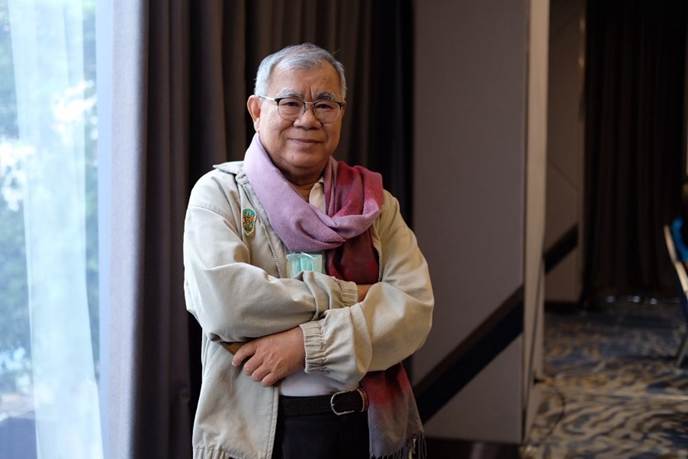
Photo: Mr. Prapoj Srithet, Board Member, Human Rights and Development Foundation (HRDF)
In addition, an effort should be made to advocate for strategic policies including the promotion of the independence of labour court to ensure its effective management and protection of labour rights.
“HRDF must take the lead to advocate for migrant workers’ robust rights and to ensure its tactical impacts in Thai society.”
—Prapoj Srithet
- Thanks to all moral support throughout the 25 years of our journey
On the 25th anniversary of HRDF, we would like to thank our board members, staff, and our partners in various areas who have been a part of our journey including those in Mahachai, Mae Sot, and the North. The outcome of our work does not belong to just one particular person. Rather, it collectively belongs to all of us who believe in the power of justice. Until now, HRDF has not just stood for migrant workers, but we have also stood to uphold the value of “equal humanity” among all people in Thai society. We shall continue the mission driven by the heart of the young generation who believe in virtue, bravery and hope.
Human rights are not an issue of one individual. Rather, they are a issue that concerns all of us