This post is also available in:
 ไทย
ไทย
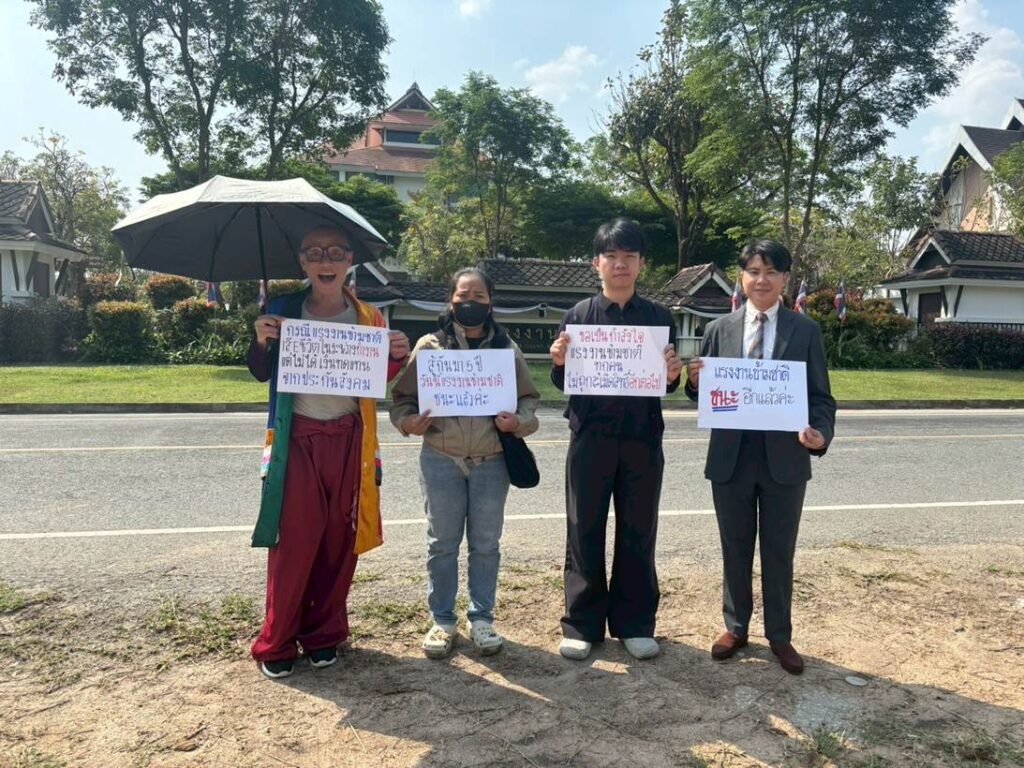
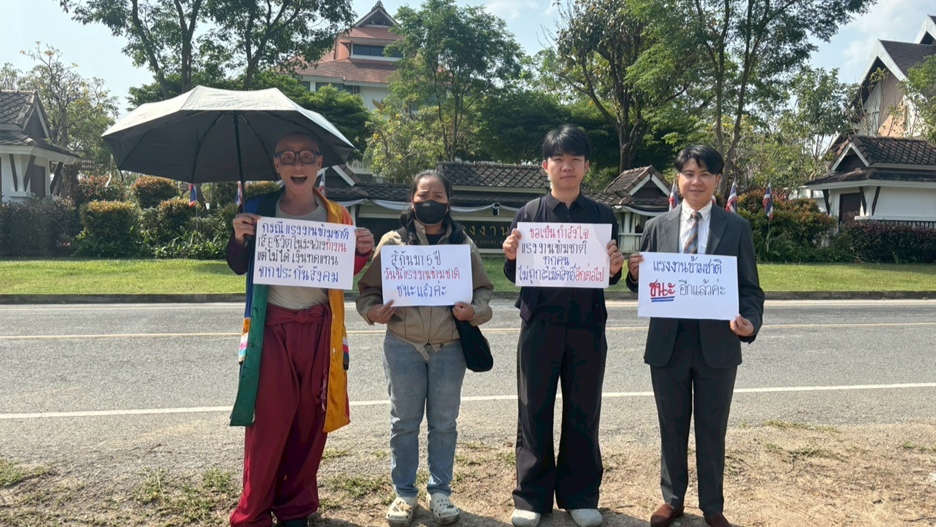
Photo 1 Press interview in front of Labour Court Region 5 Chiang Mai, as the Court dismissed further appeal by SSO and Workmen’s Compensation Fund asserting rights of migrant worker’s heir to receive compensation on 16 March 2026
“The court verdict restores long-awaited justice for my family, after more than 5 years of legal fight.”
— Aung Jing, wife and the deceased’s heir
Upon work-related death, what should automatically happen is remedies, not a protracted legal fight in court for years. This litigation did, however, happen and it was a testament to the more than five years of legal battle of the migrant worker’s family to prove their basic rights.
The Labour Court Region 5 Chiang Mai has scheduled to deliver the Supreme Court’s verdict on the appeal lodged by the Social Security Office (SSO) and the Workmen’s Compensation Fund Committee who became the accused in the case filed by the migrant worker’s heir who asked the Court to revoke the order which denied them access to work-related death benefits (read more here https://hrdfoundation.org/?p=8322).
The litigation started since late 2020. The heir has fought until both the Labour Court and the Court of Appeal have ruled in her favor. Nonetheless, the authorities decided to appeal to the Apex Court while the heir kept insisting that the denial of their rights was an infringement of the rights of an employee.
Malfunctioned system leaving worker to sacrifice their life, while family bearing the brunt
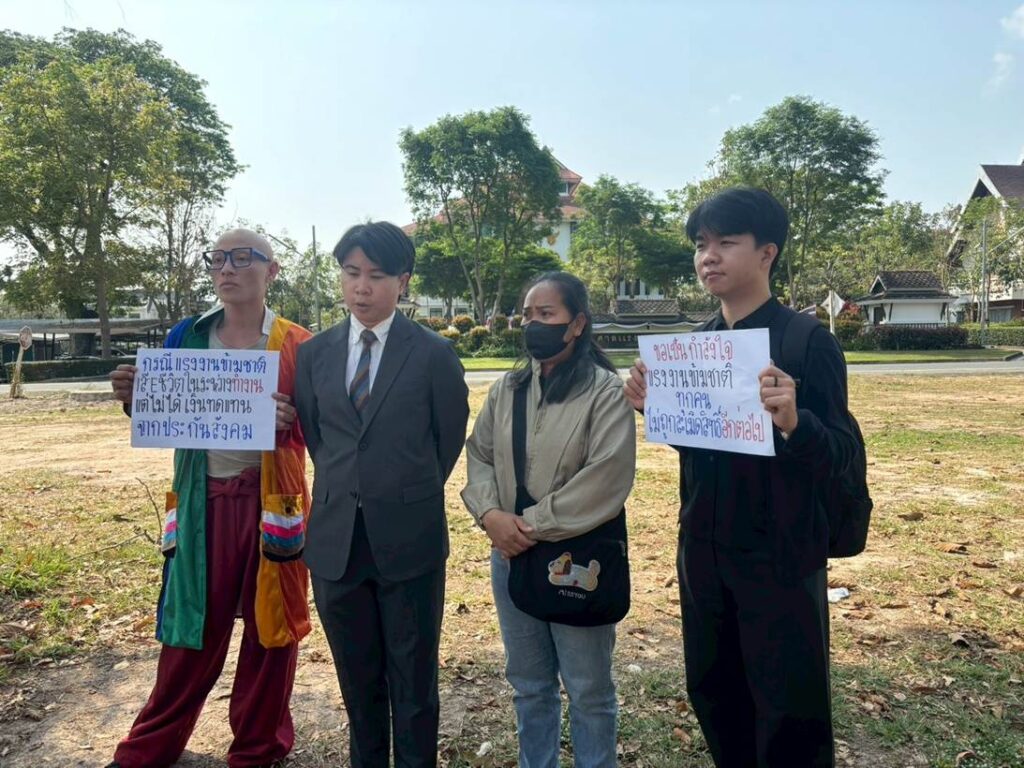
Photo 2 Press interview in front of Labour Court Region 5 Chiang Mai, as the Court dismissed further appeal by SSO and Workmen’s Compensation Fund asserting rights of migrant worker’s heir to receive compensation on 16 March 2026
“Upon my husband’s death, the Fund failed to compensate me leaving me alone to help my family to make ends meet”
— Aung Jing
Upon her husband’s death, Aung Jing’s family has never received compensation from the welfare system. Some meager help has been received from fellow workers, even though according to the law, upon occupational fatality, the worker’s heir should be entitled to a compensation. As a lawful heir for her children, she has applied to the Workmen’s Compensation Fund to request for compensation. Despite being informed of her entitlement to more than 750,000 baht as death benefits, she was denied access to the Fund’s money. It was cited that since the employer failed to register her husband and failed to pay their contributions to the Fund, therefore, her entitlement which should have happened automatically, ended up having to be proved via the court.
“During the legal battle, life was so difficult. I had no idea if we would win or lose, but I kept fighting”
— Aung Jing
Meanwhile, the employer also denied their status as the employer claiming the deceased worker was a subcontractor’s employee leaving the family to fight the legal battle on multiple fronts.
‘Not being registered is not a reason to deny one’s rights’, as the Supreme Court insisted the Fund has to pay, given the legal precedence
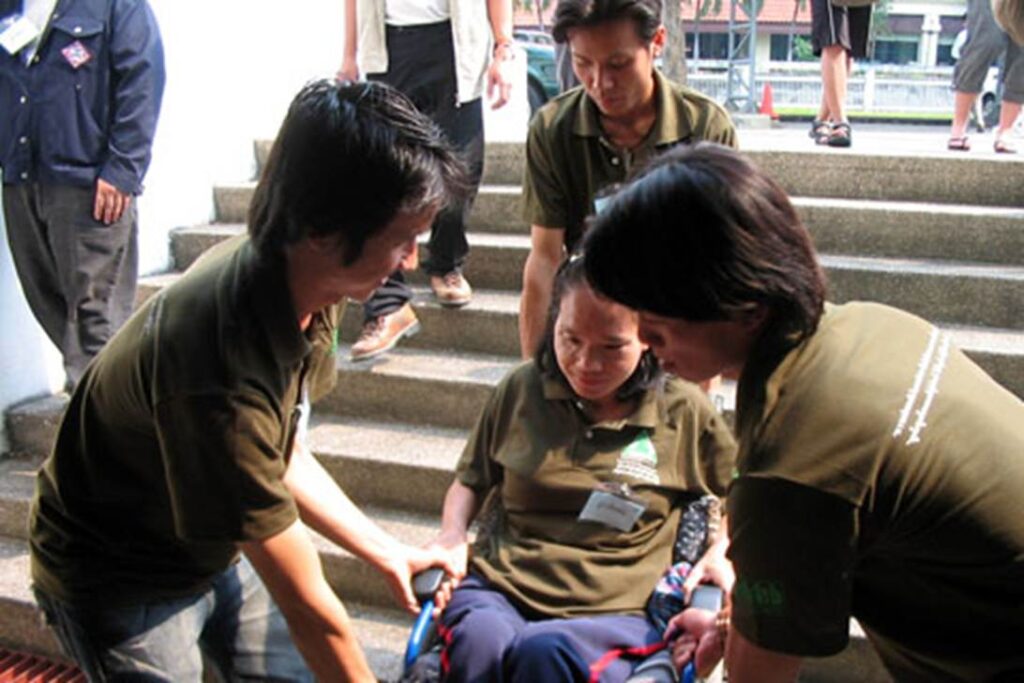
Photo 3 Ms. Noom Maisaeng, ethnic Shan migrant worker, when she travelled to Administration Court in Chiang Mai on 11 April 2018 to file the case with the Court to revoke the circular letter of the Social Security Office No. R.S.0711/W 751 dated 25 Oct. 2001, photo courtesy of Prachatai
“Although the employee was not registered with the Social Security, the Workmen’s Compensation Fund is still obligated to provide them compensation since the Supreme Court used to rule clearly that not being registered is not a reason to deprive the employee or their family of their rights. It is a direct obligation of the Fund to provide compensation.”
—Pasuta Chuenkhachorn
Lawyer Pasuta also emphasized that the Supreme Court used to rule in a similar case, the case filed by Ms. Noom Maisaeng in which the Court clearly emphasized that the fact that a worker is not registered, or their employer has failed to pay contributions, cannot be cited as a reason to deprive the worker’s direct access to the Fund. This reflects, however, that the authorities still force the workers to fight in the Court even for their basic rights. The Supreme Court stated clearly that even though a worker is not registered with the SSO, the Workmen’s Compensation Fund is still required to pay their compensation and cannot cite their lack of registration as a reason to deprive them such benefits.
In this case, the Supreme Court decided to not review the appeal of both accused since a similar case has already been adjudicated. As a result, the decisions by the previous courts stand and the employee’s family eventually has access to compensation from the Social Security Office.
Apart from victory in this individual case, the Human Rights and Development Foundation (HRDF) raised question to the SSO’s policy why it has to allow such cases to be filed in the Court repeatedly, even though the legal precedence is clear. HRDF also demands a reform of such practice to ensure all workers have access to such benefits without having to seek the judicial recourse in the future.
Despite the law, the protection has not been realized
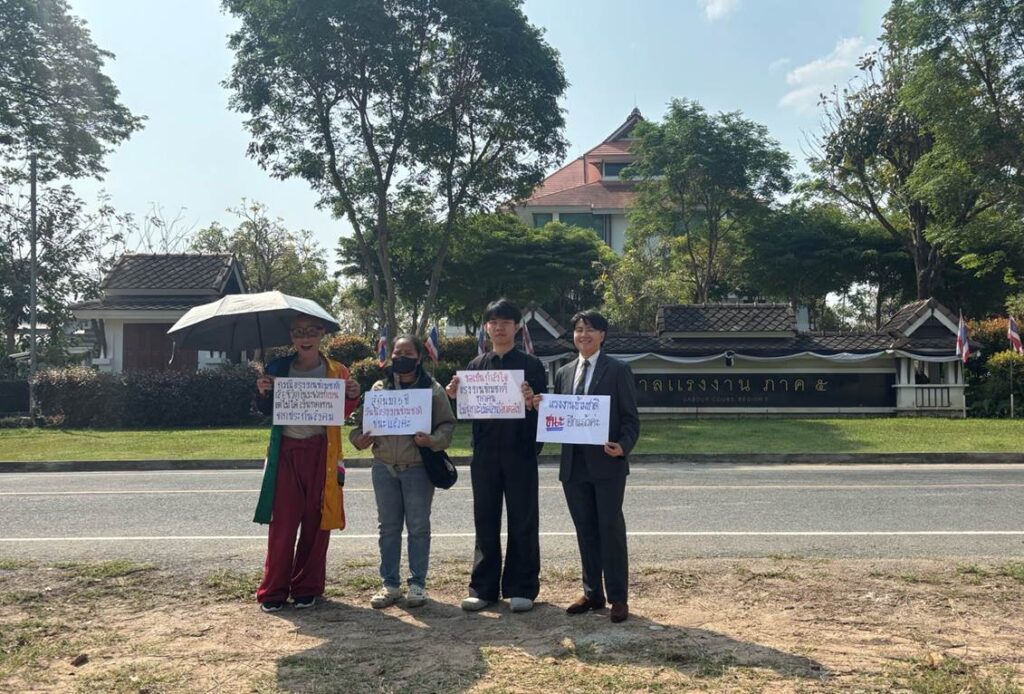
Photo 4 Press interview in front of Labour Court Region 5 Chiang Mai, as the Court dismissed further appeal by SSO and Workmen’s Compensation Fund asserting rights of migrant worker’s heir to receive compensation on 16 March 2026
“If the system is helpful, the descendants would not have to suffer like this”
— Aung Jing
This statement reflects a profound problem, the gap between “legal rights” and “real rights”. In this case, the authorities refused to provide compensation from the Workmen’s Compensation Fund claiming the employer had failed to register the employee and failed to pay contributions. Furthermore, the employer even evaded their liability by claiming that the worker was employed by their subcontractor. Nonetheless, the Labour Court ruled that such contract was considered a declaration of a fictitious intention and insisted that it was the company who was the real employer of the deceased worker.
Such case is also a clear testament that when the employer fails to act in accordance with the law and when the authorities tend to interpret law to deprive the workers’ rights, and those who have to bear the brunt are neither the employer not the state, but the employees and their family.
“If work has actually been done, and payment has actually been made, the employment relationship shall arise. Therefore, the rights as an employee should not be deprived simply because their employer fails to pay contributions, since it is the state’s duties to enforce the law against the employer. Such burden should not be passed on to the worker.”
— Sumitchai Hattasan
Sumitchai Hattasan, a labour right lawyer, explains that it is clearly stipulated in the law that eligibility to the Workmen’s Compensation Fund must be reviewed based on the facts pertaining to the employer-employee relationship, not merely the contractual relationship. Notwithstanding if the employer performs their duties according to the law or not, the Workmen’s Compensation Fund has been established to provide compensation to an injured worker instantly, without having to go through the employer.
“As their legal rights are denied in practice,
The workers are forced to seek judicial recourse as the last resort, even though it was not the bereft person to have to bear the burden.”
— Pasuta Chuenkhachorn
The lawyer in this case, Pasuta Chuenkhachorn, sheds light at the structural level as to how Thailand has an obligation according to the international labour standards to protect all employees without discrimination and to ensure an efficient remedial system is put in place to respond to work-related accidence. This case, however, demonstrates how such system fails to deliver. Eventually, it has to be the Court who has to affirm the rights of the heir. How the legal battle became protracted also showed that it was not a lack of law, but the system itself has failed to realize such legal rights in the first place. Given such systemic failure, the losses thus did not stop at the loss of the worker’s life, they have caused reverberation to the family which was left to deal with such difficult ordeal by themselves.
To ensure no one will suffer alone
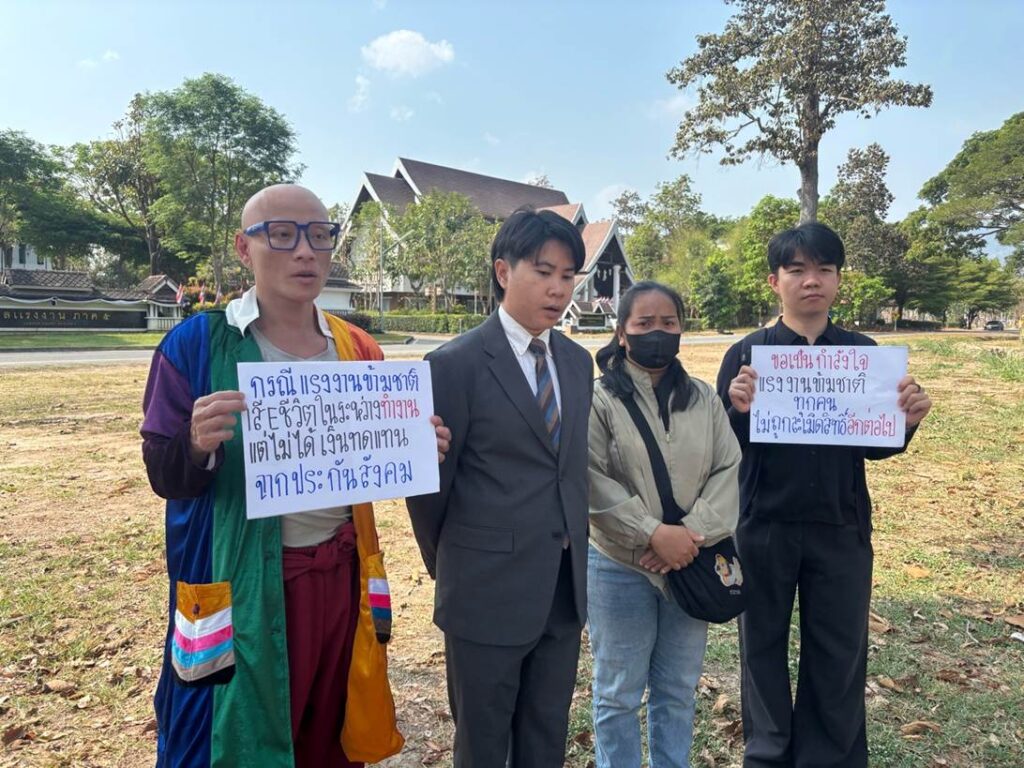
Photo 5 Press interview in front of Labour Court Region 5 Chiang Mai, as the Court dismissed further appeal by SSO and Workmen’s Compensation Fund asserting rights of migrant worker’s heir to receive compensation on 16 March 2026
“If possible, I want workers to be registered in the Social Security system as when any mishap happens, their families shall not have to suffer by themselves.”
— Aung Jing
This statement is not merely an advice. This is the voice of someone who used to fall without any systemic support behind her. Although her legal battle has ceased and justice has been restored, but what has been lost in the past five years, cannot be recouped. Lessons learned from this case are not merely about law. It raises question as to why justice has been delayed. And why a family has to be left to deal with the problem by themselves. Since in reality, if there is a proper assurance, they should not have to fall by themselves. And they should have a good backup system on which they can fall back when things take an unusual turn.
Article by
Sirirung Srisittipisarnpop
Veerawat Kamkom